
They Went Low, We Went High. They Won, We Lost. What Now?
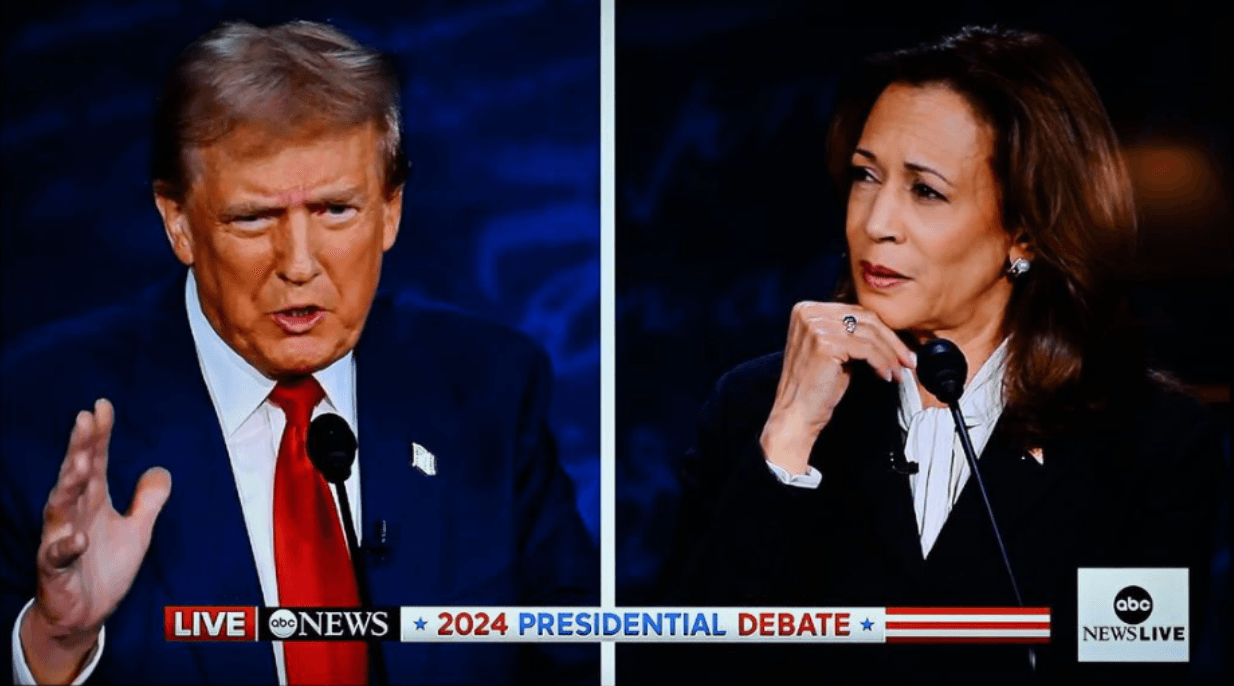
The 2024 election was clear as day. Trump made no secret of who he was: he used no euphemisms. Yet the voters still delivered him a resounding victory. That alone is shocking to the core. In light of our new, disturbing reality, the Democratic Party and pundits alike, have done a lot of reflecting as to what caused this historic defeat, and how we ought to move forward. In this article I hope to provide my perspective on these two questions, and provide a broad commentary on the nature of the American Political dialogue today.
Donald Trump is the McDonald’s Political Candidate
George Orwell, in his 1946 essay “The Politics of the English Language”, argues that the complexity of one’s writing can serve to empower authoritarianism, for its vagueness can serve to hide the true intention. In turn, he proposes rules to simplify the English language, to make its intention as clear as possible, removing the ability for it to be manipulated by the powers that be. Seventy-eight years after Orwell made his observation, we are facing the exact opposite problem. Our political discourse has become too simple.
Trump is the worst offender in this regard. Taking a look back to the 2000, 2008, and 2012 debates, the questions posed to the candidates are difficult and complex policy questions that necessitate a similarly complex response, which candidates like to deliver on. However, Trump’s debates in 2016, 2020, and 2024 are all filled with simple catch phrases rather than answers that appropriately address the questions. The discussion of how to govern the world’s foremost superpower is extremely complex, making it hard to explain intricacies to constituents. It’s hard to, when running for office, articulate to people complicated and nuanced perspectives on issues. It’s much easier to just spew a simple slogan that gets people riled up. Donald Trump, ever since he came down that fated escalator in 2015, has used and abused that ugly truth. Instead of “tariffs” he says “they’re ripping us off”, instead of asking “How do we tackle immigration?” he throws around a false accusation, “They’re eating the cats and dogs!” He sacrifices the truth. And people eat it up, they eat up his cheap, deceitful, racist, and most importantly simple, messages, by virtue of them being easier to understand and relate to, when compared with a nuanced discussion of policy. The McDonalds form of political communication: a cheap and easy tactic that doesn’t require effort. In a world where more and more people are predisposed to choose the path of least resistance, MAGA is embroiled in it.
It’s nearly impossible to effectively respond to it. People will always choose the easy slogan to the complex one, since it’s the option which creates the least amount of work for the voter, especially accounting for all the stresses of modern life, citizens are predisposed to accept simple explanations. Trump exploited this to great effect this election season. During the post Biden drop out debate he repeated the debunked lie that Haitian immigrants were eating cats and dogs, an easy emotional slogan, yet one that was a gross untruth. Despite its falsity, it spread like wildfire, unlike the articulate immigration policies of Kamala Harris. With how much the internet dominated this election, this effect was exacerbated ten fold, as easy slogans spread much faster online. After the debate concluded, the “eating cats and dogs” line went viral on Twitter, proving how emotional statements spread much faster than more rational ones.
Harris could only watch as the inflammatory railings of Trump spread faster than her plans for a better America. No doubt this had a substantial effect on the election.
Nothing Trump says matters anymore.
When Hitler was elected he made no secret of his authoritarianism, his Anti-Semitism, or his expansionist aims.Yet the voters still elected him. The same is true for Trump. Throughout the campaign, Trump took shots at immigrants, American democracy, commitments abroad, and yet people still elected him. Why? It’s because his disgusting, racist, misogynistic, queerphobic, and his countless other prejudices have become part and parcel to the Trump brand. It’s what people expect from him, because he’s been doing it for so long. The Harris campaign took a big focus on Trump’s repeated verbal attacks on democracy, which while no doubt was a valid point of critique, missed the fact that voters are not the least bit surprised Trump attacks democracy. They missed that people like Trump because of his rhetoric. Thus,here is where the Democratic campaign’s criticisms fell flat. Trump has truly brought out the worst in American society, and responding to such an occurrence with “Look what Trump said!” feeds into the inflammatory rhetoric, ending in more support for him
Harris was unable to define herself on her own terms.
Voters tend to vote based on candidates’ personalities rather than their policies. This worked to great effect with Joe Biden in 2020. The simple, old grandpa nostalgia Biden was able to present won a great deal over. Despite this,Trump has a resounding advantage by targeting a more specific voter base, and it only grew throughout the campaign. As vice president John Nance Garner once said “the vice presidency ain’t worth a pail of warm piss.” Following such logic, Kamala Harris was not well known until she was thrust into the top of the ticket following Biden’s forced removal, the chaos of which undoubtedly had an effect on the election.
Given her short time, Harris did remarkably well. She went from a net disapproval rating, to a net positive approval rating. Despite this, she simply did not have the time to define herself and what her administration would look like. People know Trump; they didn’t know Harris. While she tried to define herself, making reference to her upbringing in Oakland and the struggles that came with it, she was not exposed to the usual primary process that would normally help define a nominee to voters. In the absence of such an ability, Trump’s labeling of her as a “far leftist” is what ultimately stuck. A side effect of this is that because voters were not able to connect to her, they were less motivated to turn out and vote.
Trump thrives on low turnout: the combination of a lack of substantial preparation time for Harris and the chaos of her assent, robbed her of the ability to extrapolate her values and ideas to voters, which is what helps drive turnout. With the razor thin margins of Biden’s wins in crucial swing states in 2020, this proved to be a cataclysmic disaster.
Democrats lost the New Media Game
Donald Trump toured the podcast scene this election cycle while Harris opted to campaign on more conventional media. While in the heat of the moment this was widely seen as a Trump misstep, in retrospect, it was a wise play. The fact of the matter is old media is on its way out—most people get their news from online venues, podcasts, and social media sites like Twitter.. To be frank, the Democrats are absolutely crushed when it comes to competing with right-wing media on the Internet. Twitter was captured by Elon Musk, a far-right billionaire, who proceeded to rig the algorithm to favor Trump. The most popular podcasts in America: the Joe Rogan Show, The Tucker Carlson Show, and The Candace Owens Show, range from leaning right—to being mouthpieces of the putinist far-right.
Despite that, Haris was offered an opportunity to go on the biggest of these podcasts, the Joe Rogan Show, but refused. Trump went on, and subsequently received Rogan’s endorsement. This was a huge blunder on Harris’ behalf. This was an opportunity to enter the new media environment, one that usually favors right-wing individuals, and it was just thrown away. Many voters solely get their information from online spaces today—Democrats need a bold new strategy to reach those voters. If were to have any hope come 2028, Democrats need to regain control, or even be able to put up a decent fight, against the conservative dominance of New Media.
Gaza did not lose Harris the election
Much uproar has been made of how Harris supposedly alienated a good portion of the Democratic base by being too friendly to Israel, and its conduct in Gaza, supposing that if she had pivoted more towards a ceasefire position, she could have won. Independent of the morality of taking such a position, this is simply not true. The two most pro-ceasefire politicians in America: Bowman, and Bush, lost the respective primaries to pro-Israel challengers—a reflection of the fact that the “ceasefire” vote is a fringe camp of mostly extremists. There’s also the fact that if Harris did in fact embrace the ceasefire vote– given the noticeable rise in Antisemitism in the past few years—, it’s likely that the vital vote of the Jewish Democrats would have been sacrificed. It is then understandable why she tried to eke out a middle position of moderation, reaffirming Israel’s right to self defense, while also condemning the shocking loss of civilian life in Gaza, all the while towing the Biden administrations commitments to a lasting ceasefire. If you take all the votes Jill Stein received, and add them to Harris, she would still not come close to winning any of the counties that decided the election. This then proves that the politically motivated, fringe “ceasefire” voters were not enough to swing the election to Harris.
Pandering to the “Right” did not lose Harris the election.
Another point that has been made in light of Harris’s defeat is that she supposedly pandered too much to the moderate vote, at the cost of losing progressive voters. This is mostly a “vibes” based argument. Harris showed up with Liz Cheney on the campaign trail, touted her dad’s endorsement, and invited numerous Republicans to speak at the DNC. It might seem that she pivoted to the “right”, but looking at her actual policy positions, this is simply not the case. AOC and Bernie Sanders, vocal progressives, were given prominent speaking spots at the DNC, Harris pledged to extend Biden’s progressive record on labor and economics, and while she was an arch progressive in the Senate, she was considered one of the most progressive candidates in the race. Some may point to immigration, where Harris took a more centrist position as an example of how she took a moderate stance on many issues which Republican voters considered important, but that’s not out of the ordinary. The Democratic approach to dealing with the Southern Border was a point of failure for the Biden administration, and that was reflected in voters trusting Republicans widely over Democrats when it came to immigration, an issue of particular salience. It’s no surprise then that Harris pivoted, and provided a coherent position that differed from one largely unpopular with voters. The fact of the mater is that Harris had to walk a tightrope, uniting a tight, diverse, Anti-Trump coalition, one that includes progresives, and conservative Republicans. Losing either one of those groups had the potential to throw the election to Trump. Harris overwhelmingly won the moderate vote, but as said before, turnout was low. Was this because she alienated progressives? While it played a contributing role to the Democratic loss, party alienation was objectively not as detrimental as the lack of preparation and campaign time. Trump has had two years; Harris had four months.Trump is a juggernaut, and Harris was trying to take him down with one hand behind her back.
The Anti-Incumbent Wave: The Last Grim Act of the Covid Era.
All across the world incumbents lost re-election. The United Kingdom’s Conservatives lost in a landslide. The governing coalitions in Germany and Canada lost vote shares and are poised for defeat in the coming year. Across Europe, the Far Right and Left respectively surged at the cost of many centrist incumbents. Most analysts chalk this up to the last grim effect of the “Covid Era.” Due to the nature of American four year terms, Trump left office in 2020—the chaos of Covid— leaving Biden inheriting it and all of its negative effects. The Biden Administration did a remarkable job recovering the US economy post Covid, as shown by how we weatherd its economic effects better than any G7 nation, but, in a cruel irony, that’s not what voters remembered.
They remembered how things were cheaper in 2017 than 2024, irrespective of how the costs from 2020 to 2024 went down. Trump was only forced out because he failed to effectively respond to Covid, but he didn’t have to deal with all of its effects, so he was able to bank on his pre-Covid years for people to harken back to. Similar things happened with incumbents across the world. The US economy is, and has been for a while, doing good, but it’s not as well as it was in 2017, and voters noticed that.
How did Harris respond? Not well. She tried to defend Biden, and his record on the economy, which while noble, ignored the fact that voters associated a pre-Covid economy with Trump, a post-Covid one with Biden/Harris. And we all know which one they preferred. Breaking rank with Biden, and providing a new agenda, would have been a better move in light of the disparity between voter perceptions—and the big picture economic data.
What Now?
By far the biggest thing to take away from the 2024 election can be contextualized by the the words of Benjamin Franklin, “voters will always sacrifice their liberties for prosperity.” The economy was perceived to be bad, so therefore people cared less about what Trump was saying. America quite literally traded away its rights for “change.” Much has been made of the broad tent that the Democrats united against Trump, but the same can be said for the man himself. Trump untied together a broad group of people, former Sanders voters, including historically Democratic demographics, all united in a “populist rejection of the status quo.” Americans don’t like where our country is right now. They expressed that anger at the polls. That begs the question then, what’s fueling such anger, and what can Democrats do about it?
That comes back to the title of this article. They went Low, We went High. The lesson cannot be that we should in turn go low. Did going low win Trump the election? Undoubtedly yes. Could Democrats going low win them an election in 2028? Quite possibly. But that would be the ultimate concession to Trump. Some have proposed the Democrats should adopt a “Bernie-esque platform” and use that to topple Trump in ‘28. Doing so would be a pact with the devil. We have to remain the party of the high ground, for reasons that go beyond winning elections. The truth itself is dying, and the solution is not lying to reverse the negative effects of someone else doing. As the old saying goes, two wrongs do not make a right. The ideas that Trump campaigned on, a rejection of the elites, rabid distrust of American institutions, and economic populism, do not suddenly become good when covered up with a blue coat of paint.
The anger people are feeling could be channeled into some Democratic Socialist campaign that blames the rich for the “source of all evil” in America, to crush Trumpism. But that would not be crushing it, that would be embracing its philosophy. Embracing that simple slogans should take priority over complicated policy solutions, that partisanship should rule chiefly over bipartisanship, and that the men and women who staff the government are fundamentally bad.
Worst of all? It would mean that the ideas Trump injected into our politics would lose any opposition. The lesson of 2024 can not be that we ought to imitate Trump, for we would be admitting that he was right all along.
So what should we do, and what should the lesson be? Well we need to get better at communicating with voters, meeting them where they are, and we need to stress the importance of candidates getting the time they need to establish themselves with voters. Most importantly we need to realize when things aren’t going well, even if it’s because of us, and be willing to embrace change.
To that end, we need to “dull the blade” so to speak. There is a perception, which has come to pass due to a mix of fringe activist and right wing media dominance, that the Democratic Party hates “white collar white men”. Now, that’s not true. Never has been. But a large number of people think that. We need to fight that perception. We can not lead with a fringe policy that blames white men for their race and gender, casting them as “oppressors”. We need to pivot. These people are angry, and they should be. Their wages are stagnant, the cost of living is skyrocketing. The message to these people must be that these are products of Republican policy, not the Trans teenager yearning to live free. We need to be nice to people. We need to acknowledge that everyone has it tough.
The road ahead is horrific. Just about every right Americans take for granted, and rights that have been fought for in blood, sweat, and tears, will be attacked by a new Trump presidency. The rule of law, truth itself, and too many other things to name, will be on the firing line. The silver lining? Just like this year, voters will notice. The first Trump administration was a fuckup, and we have his second’s blueprint, and judging from its ideas, it’s poised to be an even worse cockup than the first. The road ahead is bleak, but there’s a small, bright light at the end of the tunnel. These are Hard Times, times we can, and I am sure we will, endure. But we must be vigilant that we don’t become everything we’ve fought, in exchange for reaching that light.